Goya at the Prado
The Prado Museum holds the world's largest collection of Francisco de Goya: over one hundred and thirty paintings, thousands of drawings and complete print series. A collection that begins with the luminous tapestry cartoons of the young artist and ends with the Black Paintings of the deaf old man shut away in his house on the banks of the Manzanares. Between those two extremes, Goya invented modern painting.
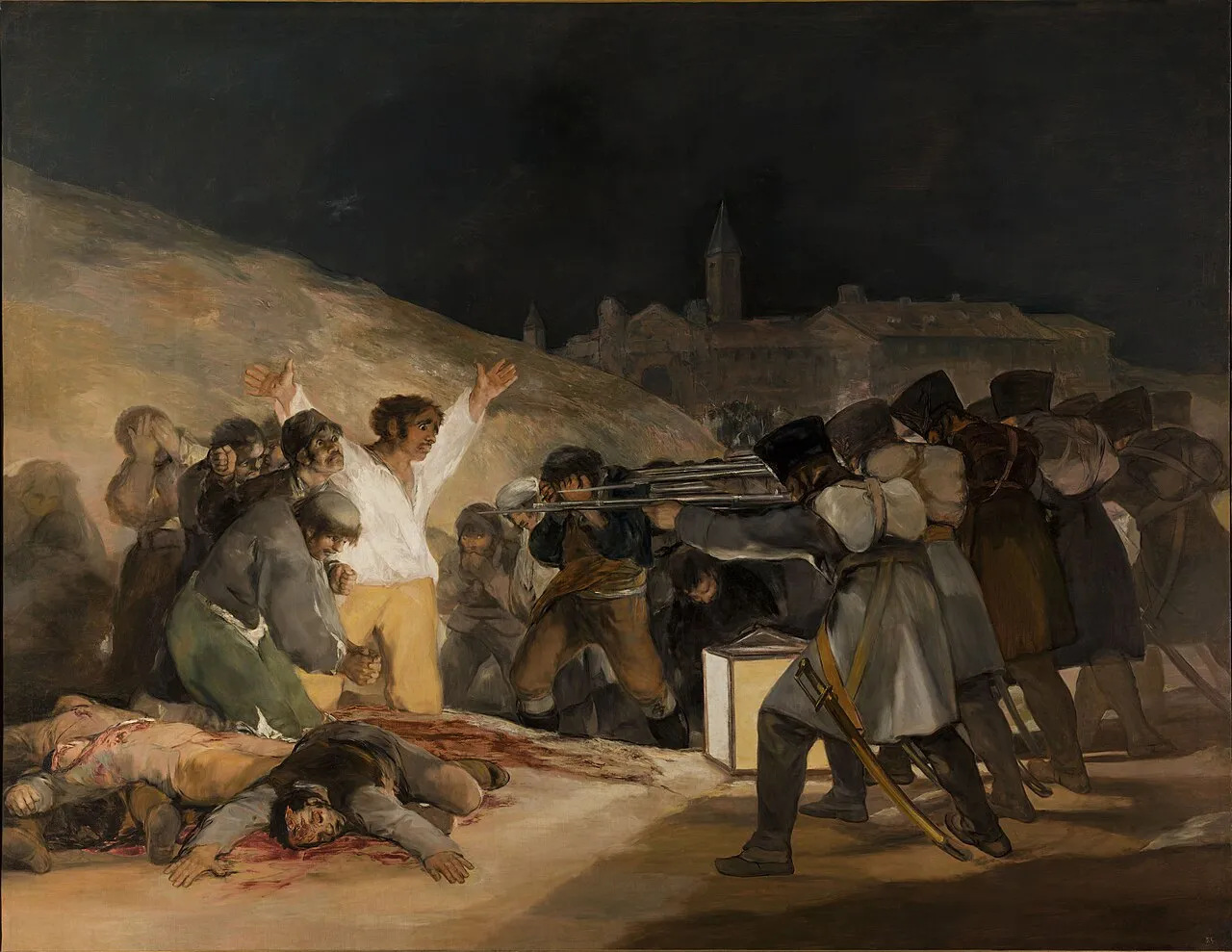
Goya and the Prado: a lifelong relationship
Francisco de Goya y Lucientes was born in Fuendetodos (Zaragoza) in 1746 and died in Bordeaux in 1828, a self-imposed exile from a Spain he no longer recognised. His life spanned the Enlightenment, the French Revolution, the Peninsular War, the absolutism of Ferdinand VII and the first stirrings of liberalism. He was a direct witness — and an obsessive painter — of one of the most turbulent periods in Spanish history.
Goya's relationship with what is now the Prado began before the museum existed: he was court painter to Charles IV and portrayed the royal family, the aristocracy and the intellectuals of his time. When the Royal Museum of Paintings opened its doors in 1819, Goya's works were already an essential part of the Crown's collection. The connection was inevitable.
The tapestry cartoons: Goya in colour
The tapestry cartoons (rooms 024–026, first floor) are the oldest Goya works at the Prado and the ones that show an artist completely different from the one who would paint Saturn forty years later. Between 1775 and 1792, Goya produced over sixty cartoons for the Royal Tapestry Factory of Santa Bárbara, intended to decorate the royal apartments.
They are scenes of popular Madrid life: The Kite, The Swing, Blind Man's Buff, The Parasol. The colours are luminous — yellows, reds, pure blues — the figures cheerful and the compositions full of movement. This is the work of a young, ambitious artist eager to please the court, who has not yet seen war. The distance between these cartoons and the Black Paintings is the distance between two historical eras and two temperaments.
The Nude Maja and The Clothed Maja: the scandal of the gaze
The two Majas (room 036, first floor) are perhaps the most celebrated Goya works after The Third of May, and also the most debated. The Nude Maja (c. 1797–1800) is one of the first non-mythological female nudes in Spanish painting: the reclining figure on a satin ottoman looks directly at the viewer with a calm defiance that is completely unusual in the pictorial tradition of the period. She is not Venus or Danaë or any goddess: she is a contemporary woman who knows she is being looked at and accepts the gaze without shame.
The scandal was enormous. The Inquisition summoned Goya in 1815 to account for "the obscene Majas". The painter attributed them to a commission from Manuel Godoy, favourite of Charles IV, and extricated himself. The Clothed Maja (c. 1800–1808) is identical in pose and composition, as if serving as a disguise for the nude. Together, the two Majas form a conceptual diptych about desire, representation and transgression.
The identity of the model has never been confirmed. Theories range from the Duchess of Alba — an intimate friend of Goya — to Pepita Tudó, Godoy's mistress. The artist himself never clarified the matter, and that mystery is a constitutive part of the works.
The Family of Charles IV: the portrait as X-ray
Painted in 1800 (room 032, first floor), The Family of Charles IV is Goya's most ambitious group portrait and one of the most disconcerting in all of European painting. King Charles IV, his wife María Luisa of Parma and their children appear in a room at Aranjuez dressed in their finest clothes and decorations. Goya himself painted his self-portrait at the back, before a large canvas, in an explicit nod to Velázquez's Las Meninas.
But the comparison with Velázquez is also a trap. Where Velázquez endowed his portraits with dignity and mystery, Goya subjected the royal family to a clinical and merciless gaze. 19th-century critics already noted that the figures look like a family of shopkeepers in their gala outfits. There is no grandeur, no real distance. The expression of María Luisa — who according to sources dominated her husband — has an almost brutal frankness. Charles IV looks good-natured and somewhat lost. The future Ferdinand VII, on the left, gazes with a coldness that bodes nothing good.
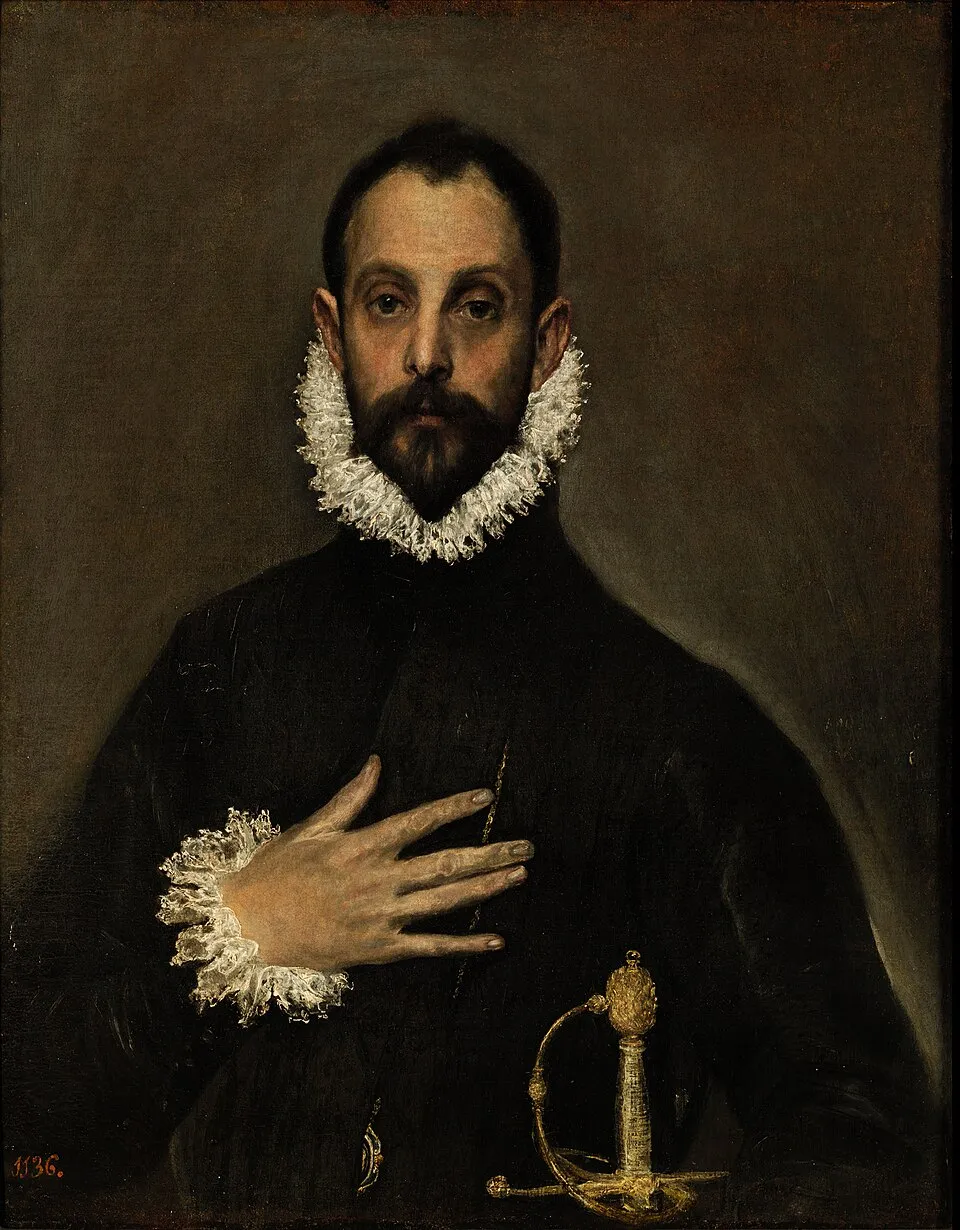
The Second and Third of May 1808: war as apocalypse
Goya's two great history paintings (room 064, first floor) were painted in 1814, six years after the events they depict, commissioned by the Council of Regency to commemorate the Spanish resistance against the Napoleonic occupation. They are the most powerful political paintings in the history of Western art.
The Second of May 1808 (also known as The Charge of the Mamelukes) shows the popular uprising in Madrid against Napoleon's troops. A chaos of bodies, horses and steel in which patriotism and terror are indistinguishable. The composition is a centreless vortex that conveys the violence of the action in its purest state.
Its companion, The Third of May 1808, is even more disturbing. At dawn the following day, French troops will execute the insurgents captured at the Moncloa walls. At the centre of the composition, a man in a white shirt raises his arms in a gesture simultaneously of supplication, defiance and surrender. His face is lit by a lantern the soldiers hold on the ground; the firing squad, turned away, is anonymous and mechanical. The victim has a face — if not a name; the executioners have none.
The painting directly influenced Édouard Manet (The Execution of Maximilian, 1867) and Pablo Picasso (Massacre in Korea, 1951). But none of those works achieves the intensity of the original.
The Black Paintings: the abyss of old age
Between 1820 and 1823, Goya painted directly on the walls of both floors of his home — the Quinta del Sordo, on the outskirts of Madrid — a series of fourteen compositions now known as the Black Paintings (room 067, first floor). They were for no one: no one had commissioned them, no one would see them until the house passed to another owner decades later. They are the private diary of a deaf, elderly man terrified by the return of absolutism.
The most important:
- Saturn Devouring His Son: The titan of Greek mythology devours the body of one of his children to prevent them from seizing his power. The figure of Saturn — with bulging eyes, dishevelled hair, hands buried in the victim's body — is one of the most disturbing images in the entire history of art. The technique is gestural, almost Expressionist: Goya seems to have painted the scene in rage and at speed, without conceding to any elegance.
- The Witches' Sabbath (The Great He-Goat): A circle of pale, misshapen figures around a black billy goat beneath a full moon. Superstition, fear and collective irrationality turned into image.
- Duel with Cudgels: Two men sink their feet in mud while beating each other with clubs. A brutal image of the Spanish conflict — liberals versus absolutists — that has no possible winner.
- Two Old Men Eating Soup: Old age and death represented with a dark tenderness: two cadaverous-looking old men share a bowl.
The Black Paintings were cut from the walls and transferred to canvas in 1874 by Baron Frédéric Émile d'Erlanger, the new owner of the house, and donated to the Prado in 1881. The transfer process inevitably altered some compositions, but the impact of the works remains devastating.
Discover Goya with an expert guide
A guided tour of the Prado takes you through Goya's rooms — the Majas, The Third of May, the Black Paintings — with all the historical context and detailed explanation you need to understand his evolution.
See Prado guided tour →⏳ Time-slot places are limited. Lock in your time · free cancellation.
Practical tips for visiting Goya's rooms
- Follow the chronological order. Seeing the tapestry cartoons before the Black Paintings makes the contrast even more striking. The museum's layout facilitates this itinerary.
- Spend time in room 067. The Black Paintings are in a relatively small room that tends to be less crowded than the Las Meninas room. It is a place to linger.
- Don't skip room 064. The Third of May and The Second of May hang together in a room that many visitors rush past on their way to Las Meninas. Both works deserve a long stop.
- Arrive first thing or during free-admission hours. The Prado opens at 10:00. Free slots are 18:00–20:00 Monday to Saturday and 17:00–19:00 on Sundays and public holidays.
- Book your ticket in advance. In high season, tickets for specific time slots sell out. Booking online avoids queues and guarantees access.
Frequently asked questions about Goya at the Prado
Where are Goya's works at the Prado?
The main Goya works are spread across room 032 (The Family of Charles IV), rooms 024–026 (tapestry cartoons), room 036 (the Majas), room 064 (The Second and Third of May) and room 067 (Black Paintings), all on the first floor.
Who is Goya's Maja?
Her identity has not been confirmed with certainty. The most repeated theories point to the Duchess of Alba or Pepita Tudó, the mistress of the favourite Godoy.
What are Goya's Black Paintings?
Fourteen murals painted by Goya directly on the walls of his home between 1820 and 1823, with no commission or audience. Characterised by a dark palette and terrifying themes, they anticipate 20th-century Expressionism.
How many Goya works does the Prado hold?
Over 130 paintings, plus drawings and print series. It is the world's largest Goya collection.
Why did Goya paint the Black Paintings?
Goya painted them for himself, in his private retreat, probably as an expression of his fears at the return of Ferdinand VII's absolutism and his own physical decline. They had no audience or public function.
Standing before Saturn in room 067, with his unseeing eyes and his hands grasping the victim's body, it is hard to believe this was painted by the same artist who, decades earlier, was decorating royal apartments with scenes of majos and majas flying kites in the skies above Madrid.
Content reviewed by the Ticket Visit team · June 2026.